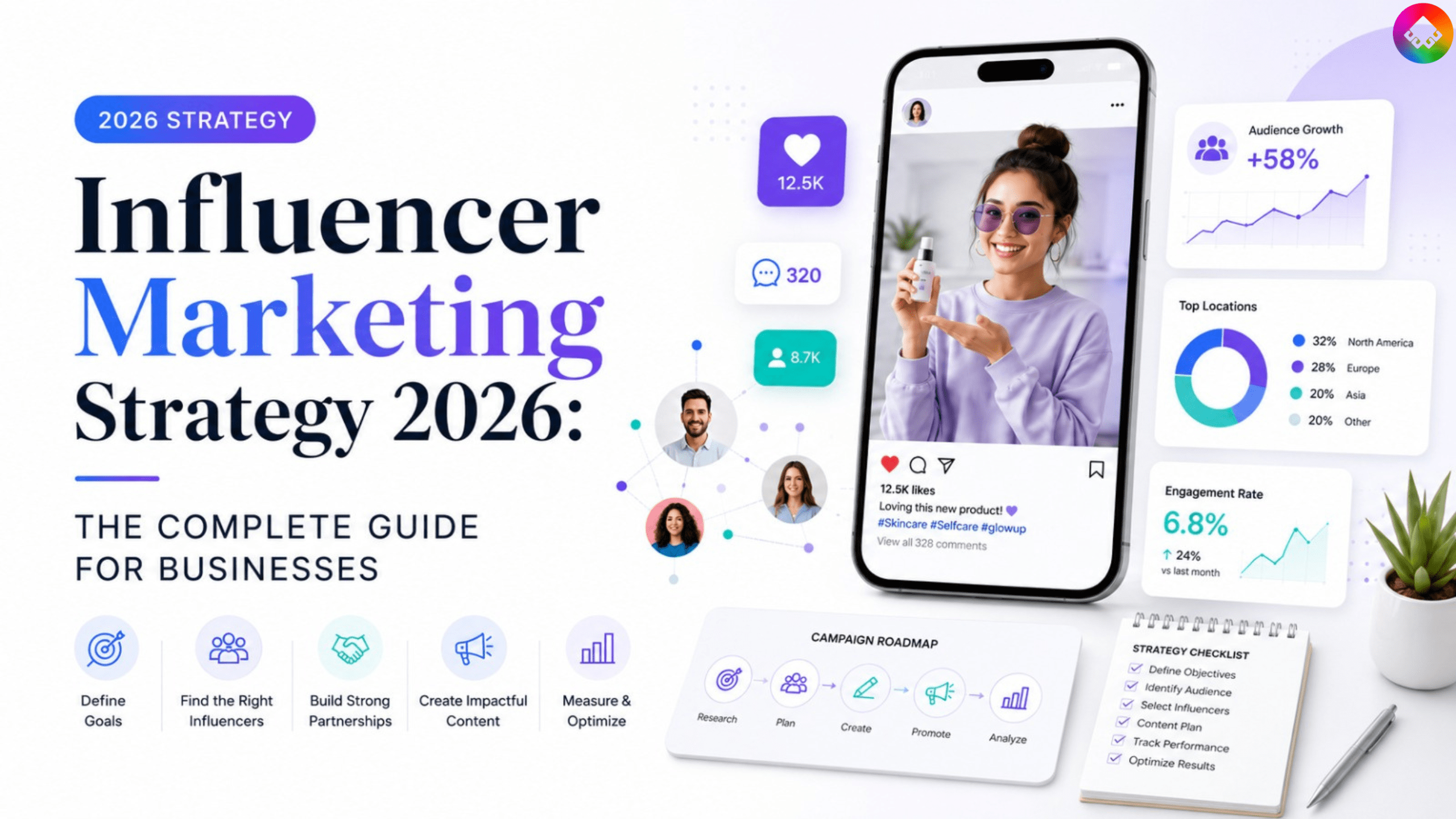
Brands that win in 2026 will not be the ones with the biggest budgets. They will be the ones with the smartest influencer marketing strategy. Social platforms have changed. Audiences have changed. The old playbook of paying a famous face to hold up a product no longer works the way it used to.
This guide breaks down what a modern influencer marketing strategy looks like today. You will learn how to plan it, build it, run it, and measure it. By the end, you will know exactly how to create an influencer marketing strategy that brings real growth, not just likes.
What Is an Influencer Marketing Strategy?

Influencer marketing involves partnering with people who hold significant influence over a target audience, typically through social media platforms, blogs or other online channels. It is not just “find someone with followers and pay them.” A real influencer marketing strategy includes goals, audience research, creator selection, content rules, budget, and a way to measure results.
Without a strategy, brands waste money on random posts that do not connect to any business goal. With a strong plan in place, every post, video, or story works toward something measurable, such as sales, sign-ups, or brand trust.
Why Businesses Need an Influencer Marketing Strategy in 2026

Trust in traditional ads keeps dropping. People scroll past banner ads and skip pre-roll videos. But they stop and watch when someone they follow recommends a product. This is why an influencer marketing strategy has become a core part of digital marketing, not a side experiment.
Here are the main reasons businesses need a solid influencer marketing strategy this year.
1. Audiences Trust Creators More Than Brands
People trust other people. A recommendation from a creator feels personal. A well-planned approach uses this trust to introduce products in a way that feels natural, not forced.
2. Platforms Reward Creator Content
Social platforms now push creator-made content higher in feeds than brand-made ads. An influencer marketing strategy that uses real creators gets better reach simply because of how platform algorithms work in 2026.
3. Buying Habits Have Shifted
Shoppers research products through short videos and reviews before they buy. A smart influencer marketing strategy puts your product directly into that research journey, right when people are deciding what to purchase.
4. It Works Across the Full Funnel
A flexible influencer marketing strategy is not just for awareness. It can drive consideration, conversions, and even loyalty, all using the same creator relationships.
While influencer marketing is highly effective on its own, it delivers the best results when combined with other proven marketing tactics. Learn how to create a well-rounded growth strategy in our article, 10 Digital Marketing Strategies for 2026 Success.
Step 1: Set Clear Goals for Your Influencer Marketing Strategy

Every successful influencer marketing strategy starts with a goal. Vague goals lead to vague results. Pick one or two main goals before you reach out to a single creator.
Common goals include:
- Building brand awareness among a new audience
- Driving website traffic or app downloads
- Increasing direct sales or bookings
- Growing an email list or community
- Improving brand trust after a rough patch
Your goal shapes everything else in your influencer marketing strategy, including which creators you pick and how you measure success. A strategy built for awareness looks very different from one built for direct sales.
Step 2: Know Your Audience Before Picking Creators
A common mistake businesses make is choosing creators based on follower count alone. This is one of the fastest ways to waste a budget. A better approach starts with audience research, not creator browsing.
Ask these questions first:
- Who is your ideal customer, and where do they spend time online?
- What type of content do they already enjoy watching?
- What problems are they trying to solve?
- Which creators do they already trust and follow?
Once you understand your audience, your influencer marketing strategy becomes much easier to build. You are no longer guessing. You are matching creators to real people with real needs.
Step 3: Choose the Right Type of Influencer
Not every brand needs a celebrity. In fact, most do not. A modern influencer marketing strategy usually performs better with smaller, more focused creators.
Mega Influencers
These have over a million followers. They offer wide reach but often lower engagement and high cost. They fit big brand awareness campaigns.
Macro Influencers
These have around 100,000 to 1 million followers. They work well for businesses that want solid reach with a more affordable price than mega influencers.
Micro Influencers
These have around 10,000 to 100,000 followers. Many brands now build their entire creator plan around micro influencers because they bring strong engagement and tighter audience trust.
Nano Influencers
These have under 10,000 followers but often the highest trust levels. A nano-focused influencer marketing strategy can be powerful for local businesses or niche products.
Picking the right mix, instead of chasing follower count, is often what separates a winning influencer marketing strategy from a wasted budget.
Step 4: Decide on Content Formats
Your influencer marketing strategy needs to match the content formats your audience actually watches. In 2026, short-form video still leads, but other formats remain valuable depending on the platform and product.
Popular formats to include in your content plan:
- Short videos showing product use in real life
- Honest review-style content, including pros and cons
- Behind-the-scenes looks at how a product is made
- Live shopping events hosted by trusted creators
- Long-form tutorials for complex products or services
A flexible influencer marketing strategy mixes formats based on what fits each platform, rather than forcing one type of content everywhere.
Step 5: Set a Realistic Budget
Budget planning is where many influencer marketing strategy efforts fall apart. Businesses either overspend on big names or underpay creators, leading to weak content and poor results.
When building the budget side of your plan, consider:
- Creator fees based on platform, format, and audience size
- Production costs if creators need extra support
- Paid boosting budget to extend reach on top posts
- A testing budget to try new creators before bigger contracts
A smart influencer marketing strategy treats budget as flexible. Start small with a few creators, see what performs, then shift more budget toward what works.
Step 6: Build Real Relationships With Creators

The best influencer marketing strategy treats creators as partners, not vendors. One-off paid posts rarely build lasting trust with an audience. Long-term partnerships do.
Tips for stronger creator relationships within your plan:
- Give creators creative freedom instead of rigid scripts
- Pay fairly and on time
- Share clear brand goals, not just talking points
- Ask for their input on what their audience responds to
- Consider ongoing partnerships over single campaigns
Building strong creator relationships is similar to building strong audience relationships. Brands that prioritize authenticity, trust, and meaningful interactions often see better long-term results. For more insights, read our guide on Social Media Engagement Tips to Build a Loyal Audience. When creators feel like partners, their content feels more honest. That honesty is exactly what makes an influencer marketing strategy work in the first place.
Step 7: Create Clear Briefs Without Killing Creativity
A brief is where your plan turns into actual content. A good brief gives direction without controlling every word.
Include in every brief:
- The main goal of the campaign
- Key message points to mention
- Required disclosures or legal notes
- Brand guidelines, such as tone or values to avoid
- Deadline and deliverables
Avoid scripting every sentence. Letting creators speak in their own voice is part of why an influencer marketing strategy built on authenticity performs better than one built on control.
Step 8: Track the Right Metrics
Measuring results is where many influencer marketing strategy plans either prove their value or get cut from next year’s budget. Tracking the right numbers matters more than tracking many numbers.
Metrics worth including in your tracking plan:
Awareness Metrics
- Reach and impressions
- Follower growth during the campaign
- Branded hashtag usage
Engagement Metrics
- Likes, comments, and shares
- Saves, which often signal stronger interest
- Click-through rate on links
Conversion Metrics
- Sales linked to creator promo codes
- Sign-ups from tracked links
- Return on ad spend for boosted creator content
A complete influencer marketing strategy looks at all three categories, not just likes and comments. Vanity metrics feel good but rarely tell the full story.
Step 9: Stay Compliant With Disclosure Rules

Legal compliance is a part of influencer marketing strategy that businesses cannot skip. Regulators in most countries require clear disclosure when content is paid or gifted.
Make sure your campaign plan includes:
- Clear “ad” or “sponsored” labels on all paid content
- Honest claims about product performance
- Compliance with platform-specific disclosure tools
- Contracts that spell out disclosure requirements
Skipping this step can lead to fines and damaged trust, undoing all the work put into the rest of your influencer marketing strategy.
Step 10: Test, Learn, and Adjust
No influencer marketing strategy is perfect on the first try. The businesses that win treat their strategy as something to test and improve constantly.
Ways to keep improving your overall approach:
- Run small test campaigns before big launches
- Compare performance across creator sizes
- Try new content formats every quarter
- Ask creators for direct feedback on what worked
- Revisit goals every few months as the market shifts
Treating your influencer marketing strategy as a living plan, rather than a fixed document, keeps it useful as platforms and audiences keep changing.
Common Mistakes That Hurt Your Results

Even well-funded brands make mistakes that quietly damage their influencer marketing strategy. Watch out for these:
- Picking creators based only on follower count
- Writing scripts so rigid that content feels fake
- Ignoring smaller creators with stronger engagement
- Failing to track sales or sign-ups properly
- Treating influencer marketing as a one-time campaign instead of an ongoing strategy
Many of these mistakes become expensive because businesses fail to measure campaign performance correctly. Tracking engagement, conversions, customer acquisition costs, and return on investment helps identify what is working and what needs improvement. Learn more in our guide on The Power of Data Analytics in Digital Marketing. Avoiding these mistakes keeps your influencer marketing strategy efficient and believable to the people you are trying to reach.
What Creator Partnerships Will Look Like Later in 2026
A few shifts are shaping how businesses will run their influencer marketing strategy for the rest of the year and beyond.
- AI-assisted creator matching will help brands find the right creators faster, based on real audience data instead of guesswork.
- Long-term ambassador programs will keep growing, as one-off posts lose impact compared to ongoing partnerships.
- Performance-based payment models will rise, tying creator pay closer to actual sales or sign-ups.
- Smaller, niche creators will keep gaining ground over big-name influencers, especially for trust-driven purchases.
- Video-first platforms will remain the center of any strong creator plan, with text-based promotion playing a smaller role.
Businesses that adjust their influencer marketing strategy around these shifts now will have a real advantage over competitors who stick to outdated methods.
How to Choose the Right Platform for Your Strategy

Not every platform fits every brand. Part of building a working influencer marketing strategy is matching the platform to your audience and product type, instead of trying to be everywhere at once.
- Short-video platforms work well for products that benefit from a quick demo, a transformation, or an emotional hook. Beauty, fashion, food, and fitness brands often see strong results here.
- Photo and story-based platforms suit brands with a strong visual identity, such as home decor, travel, or lifestyle products. Creators on these platforms tend to build slower, more personal relationships with followers.
- Long-form video platforms fit products that need explanation, such as software, finance tools, or anything technical. Viewers on these platforms expect depth, not just a quick pitch.
- Community and forum-style platforms work for niche products where trust comes from detailed discussion rather than polished visuals.
Spreading your budget too thin across every platform weakens results. A focused approach usually performs better when it goes deep on one or two platforms instead of shallow on five.
Building an In-House Team vs. Using an Agency

Businesses often ask whether they should run their creator program with an in-house team or hand it to an agency. Both paths can work, depending on size and resources.
An in-house team gives more control over creator relationships and brand voice. It works well for businesses with the time to manage outreach, contracts, and content review directly. Over time, an in-house influencer marketing strategy can also be cheaper, since there is no agency fee on top of creator costs.
An agency brings existing creator relationships, faster execution, and experience avoiding common mistakes. This fits businesses that want results quickly or do not have a marketing team large enough to manage outreach and tracking on their own.
Some businesses use a mixed model. They keep strategy and goal-setting in-house but use an agency for creator sourcing and negotiation. Whichever path you choose, make sure whoever runs the day-to-day work understands the full strategy, not just the task of booking creators.
Sample 90-Day Plan to Launch Your Strategy

Putting an influencer marketing strategy into action becomes easier with a simple timeline. Here is a basic 90-day plan businesses can adapt.
Days 1–15: Research and Planning Set goals, study your audience, and shortlist creator types that fit your product. This is also the stage to set your budget range and choose your main platform.
Days 16–30: Outreach and Negotiation Reach out to a small group of creators, ideally five to ten, to test fit before committing to a larger group. Agree on deliverables, timelines, and payment terms.
Days 31–45: Content Creation Send briefs, allow creators time to film and edit, and review drafts without over-editing their natural voice. This stage is where many businesses either strengthen or weaken their plan, depending on how much creative freedom they allow.
Days 46–60: Launch and Monitor Publish content according to schedule. Watch early engagement closely so you can boost strong posts with paid spend while they are still gaining traction.
Days 61–75: Measure Results Pull metrics across awareness, engagement, and conversions. Compare creators against each other to see which ones brought the best return.
Days 76–90: Review and Plan Next Round Decide which creators to continue working with, which formats performed best, and how to adjust budget for the next cycle. This step turns a single campaign into a repeatable process rather than a one-time effort.
Frequently Asked Questions
1. What is influencer marketing?
Influencer marketing is a strategy where businesses collaborate with content creators to promote products or services to their audience through social media, blogs, videos, and other digital platforms.
2. Why is influencer marketing important in 2026?
Consumers trust recommendations from creators more than traditional advertisements. Influencer marketing helps brands increase awareness, engagement, credibility, and sales while reaching highly targeted audiences.
3. Which social media platforms are best for influencer marketing?
The best platform depends on your target audience and goals. Popular options include:
- TikTok
- YouTube
4. How do I choose the right influencer for my business?
Look for influencers whose audience matches your target market. Evaluate engagement rates, content quality, authenticity, brand fit, and previous campaign performance rather than focusing only on follower count.
5. What is the difference between nano, micro, and macro influencers?
- Nano Influencers: 1,000 – 10,000 followers
- Micro Influencers: 10,000 – 100,000 followers
- Macro Influencers: 100,000 – 1 million followers
- Mega Influencers: Over 1 million followers
6. How much does influencer marketing cost?
Costs vary based on the influencer’s reach, niche, engagement, content type, and campaign requirements. Nano and micro influencers are generally more affordable than macro and mega influencers.
7. What metrics should businesses track?
Key metrics include:
- Reach and impressions
- Engagement rate
- Website traffic
- Click-through rate (CTR)
- Lead generation
- Conversion rate
- Sales revenue
- Return on investment (ROI)
8. Are micro-influencers better than celebrity influencers?
Not always, but micro-influencers often have higher engagement rates, stronger audience trust, and lower campaign costs, making them attractive for many businesses.
Final Thoughts
A strong influencer marketing strategy is no longer optional for businesses that want to grow in 2026. It requires clear goals, real audience research, the right creator partnerships, honest content, and careful measurement. Skipping any of these steps weakens the whole plan.
Start small if needed. Test creators, formats, and messages. Build your influencer marketing strategy around real relationships rather than one-time transactions. Over time, this approach builds something far more valuable than a single viral post: lasting trust with the people you want as customers.
While influencer marketing can generate awareness and engagement, businesses also need a clear path that turns interested audiences into paying customers. Our guide on Building a Digital Marketing Funnel That Converts explains how to create a customer journey that supports long-term growth. Businesses that treat their influencer marketing strategy as an ongoing process, not a one-time campaign, will be the ones still winning attention and sales long after trends move on.