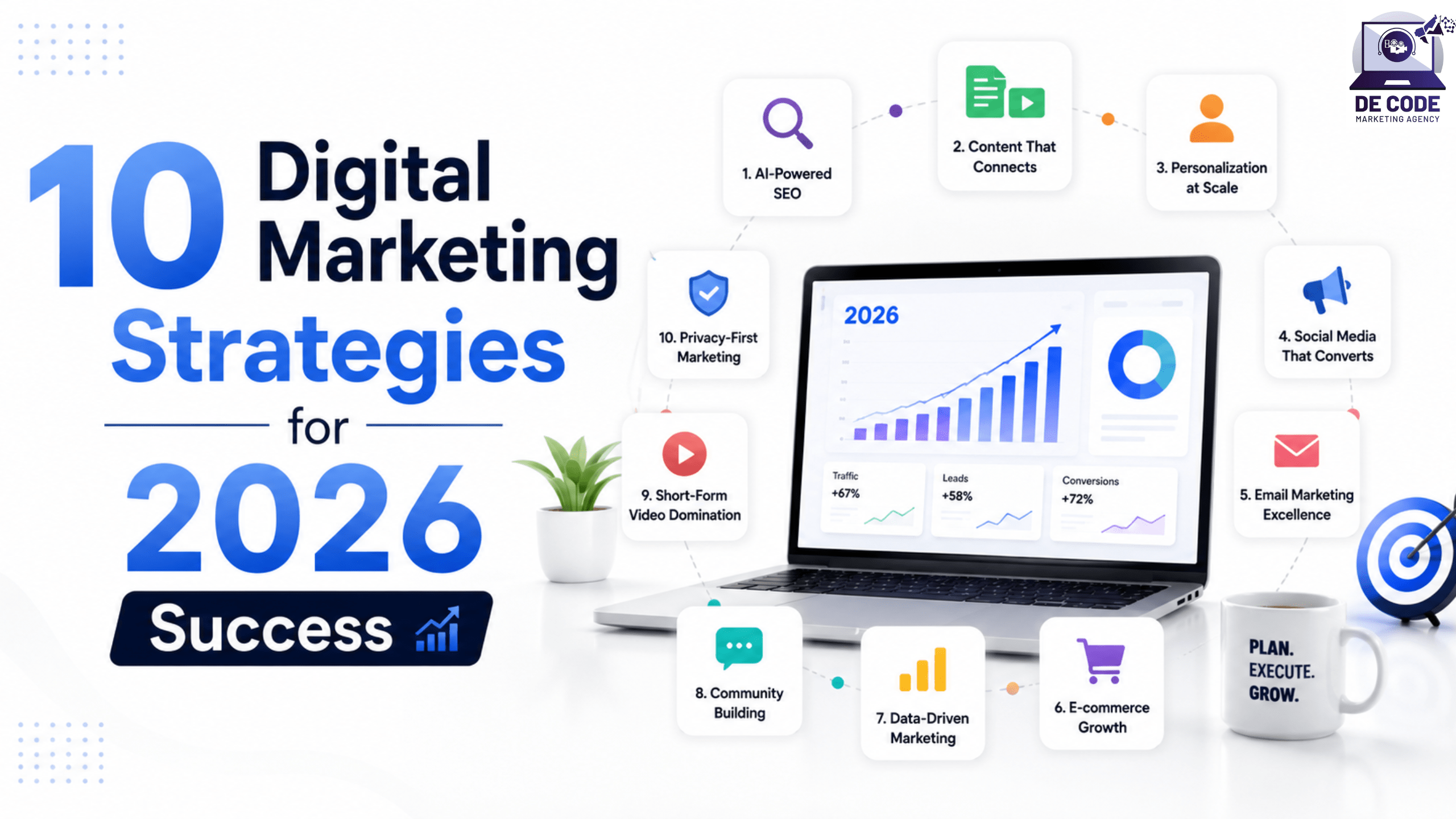
The digital marketing landscape in 2026 is more intelligent, immersive, and customer-focused than ever before. Technology continues to evolve at lightning speed, reshaping how brands connect with audiences. Artificial intelligence, automation, and immersive experiences are no longer optional they are essential for staying competitive. Consumers expect brands to understand their needs, communicate authentically, and deliver value instantly. Businesses that adapt to these expectations will thrive, while those that resist innovation risk falling behind.
This guide explores ten comprehensive digital marketing strategies designed to help businesses succeed in 2026. Each strategy focuses on practical implementation, measurable outcomes, and adaptability to emerging trends. Together, they form a roadmap for building stronger customer relationships, improving brand visibility, and driving sustainable growth.
AI-Driven Personalization and Predictive Marketing
In digital marketing, AI encompasses technologies such as machine learning algorithms, natural language processing, computer vision, and intelligent automation. AI-driven personalization is one of the most transformative digital marketing strategies, changing marketing from reactive to predictive. In 2026, AI tools analyze massive amounts of data to anticipate customer needs, personalize experiences, and optimize campaigns in real time. Predictive marketing allows brands to deliver the right message to the right person at the right time.
Key Components
- Predictive Analytics: AI models forecast customer behavior, helping marketers anticipate future actions such as purchases or churn.
- Dynamic Personalization: Websites, emails, and ads automatically adapt to each user’s preferences and browsing history.
- AI Chatbots: Intelligent bots provide instant, personalized support, improving satisfaction and reducing response times.
Implementation Tips
- Use AI-powered platforms like Adobe Sensei or Salesforce Einstein to analyze customer data.
- Segment audiences dynamically based on real-time behavior.
- Continuously train algorithms with updated data to improve accuracy.
Benefits
- Higher engagement and conversion rates
- Reduced marketing waste through precise targeting
- Improved customer satisfaction and loyalty
Extended Insights
AI-driven personalization also enhances content creation. Tools can now generate personalized product recommendations, tailor blog content, and even adjust tone and visuals based on user profiles. Predictive analytics can identify when a customer is most likely to engage, allowing marketers to schedule communications for maximum impact. As AI becomes more accessible, even small businesses can leverage these tools to compete with larger brands.
AI also supports hyper-personalized advertising. Instead of broad demographic targeting, marketers can now use behavioral and contextual data to deliver ads that feel relevant and timely. For example, a travel company can use AI to predict when a customer is likely to plan their next vacation and deliver personalized offers accordingly. This level of precision not only improves ROI but also enhances the customer experience.
Voice Search Optimization
Voice search optimization represents essential digital marketing strategies as smart devices become more integrated into daily life. Consumers use voice assistants for everything from finding local businesses to making purchases. Optimizing for voice search ensures that brands remain visible in this conversational search environment.
Key Components
- Conversational Keywords: Focus on natural, question-based phrases that reflect how people speak.
- Featured Snippets: Structure content to answer common questions directly.
- Local SEO: Optimize for “near me” searches and ensure business listings are accurate.
Implementation Tips
- Create FAQ pages that mirror spoken queries.
- Use schema markup to help search engines understand context.
- Ensure websites load quickly and are mobile-friendly.
Benefits
- Increased visibility in voice-enabled devices
- Improved local search rankings
- Enhanced accessibility for all users
Extended Insights
Voice search optimization also impacts content tone and structure. Instead of focusing solely on short keywords, marketers must craft content that sounds natural when spoken aloud. For example, instead of targeting “best coffee shop,” optimize for “Where can I find the best coffee shop near me?” Additionally, voice search often leads to zero-click results, meaning brands must focus on brand recall and trust to convert users later in the journey.
As voice technology evolves, it will integrate more deeply with smart homes, cars, and wearable devices. This creates new opportunities for brands to engage customers in everyday moments. For instance, a fitness brand could deliver personalized workout reminders through a smart speaker, or a grocery store could suggest recipes based on what’s in a customer’s smart fridge.
Video Marketing and Interactive Content
Video marketing ranks among the most effective digital marketing strategies, with short-form and interactive content dominating social platforms. In 2026, short-form and interactive videos dominate social platforms. Consumers prefer quick, visually appealing content that entertains, educates, or inspires.
Key Components
- Short-Form Videos: Platforms like TikTok, YouTube Shorts, and Instagram Reels drive massive engagement.
- Interactive Videos: Viewers can click, vote, or explore within the video itself.
- Live Streaming: Real-time interaction builds authenticity and community.
Implementation Tips
- Focus on storytelling that connects emotionally with viewers.
- Add captions and accessibility features for inclusivity.
- Use analytics to measure engagement and refine future content.
Benefits
- Higher engagement and retention
- Stronger emotional connection with audiences
- Increased brand visibility
Extended Insights
Interactive content extends beyond video. Quizzes, polls, and augmented reality (AR) experiences allow users to participate actively. For example, beauty brands use AR filters to let customers “try on” products virtually. Educational brands use interactive videos to teach complex topics in engaging ways. The key is to create content that invites participation rather than passive consumption.
In 2026, immersive video formats such as 360-degree experiences and virtual reality (VR) storytelling are becoming mainstream. These formats allow audiences to explore environments, products, or stories in a more engaging way. Brands that invest in immersive storytelling can create memorable experiences that drive deeper emotional connections.
Social Commerce and Shoppable Content
Social commerce represents innovative digital marketing strategies that blend entertainment, community, and seamless purchasing experiences. In 2026, consumers can discover, evaluate, and purchase products directly within social platforms. Social commerce blends entertainment, community, and convenience.
Key Components
- In-App Shopping: Platforms like Instagram, TikTok, and Pinterest offer seamless checkout experiences.
- User-Generated Content (UGC): Authentic customer posts drive trust and conversions.
- Influencer Partnerships: Collaborations with micro and nano influencers enhance credibility.
Implementation Tips
- Tag products in posts and stories for direct purchases.
- Encourage customers to share experiences using branded hashtags.
- Use analytics to track conversion paths from social engagement to sales.
Benefits
- Reduced friction in the buying process
- Increased conversion rates
- Enhanced brand authenticity
Extended Insights
Social commerce thrives on authenticity. Consumers trust real people more than polished ads. Brands that encourage customers to share honest reviews and experiences see higher engagement. Additionally, integrating loyalty programs within social platforms can reward repeat customers and foster community. The future of e-commerce lies in blending social interaction with seamless purchasing.
Social commerce also benefits from AI integration. Algorithms can recommend products based on user behavior, while chatbots can assist with purchases directly within messaging apps. This creates a personalized shopping experience that feels natural and convenient.
Data Privacy and Ethical Marketing
Privacy-first digital marketing strategies are essential in 2026 as consumers demand transparency and ethical data practicesData privacy is a top priority in 2026. Consumers are more aware of how their data is used, and governments continue to enforce stricter regulations. Ethical marketing builds trust and long-term loyalty.
Key Components
- Compliance: Follow global privacy laws like GDPR and CCPA.
- Transparency: Clearly explain how data is collected and used.
- Consent Management: Allow users to control their data preferences.
Implementation Tips
- Use privacy-first analytics tools that anonymize user data.
- Offer incentives for voluntary data sharing.
- Regularly audit data practices for compliance.
Benefits
- Strengthened brand reputation
- Increased customer trust
- Reduced legal risks
Extended Insights
Ethical marketing goes beyond compliance. It involves respecting customer boundaries and prioritizing transparency. Brands that communicate openly about data usage often gain a competitive advantage. For example, offering clear privacy dashboards or explaining how data improves user experience can turn privacy into a trust-building opportunity.
In 2026, privacy-first marketing also means relying more on first-party data. As third-party cookies phase out, brands must build direct relationships with customers through loyalty programs, newsletters, and personalized experiences. This shift encourages more meaningful engagement and long-term retention.
Omnichannel Marketing Integration
Consumers interact with brands across multiple touchpoints websites, apps, social media, email, and physical stores. Omnichannel digital marketing strategies ensure consistent experiences as consumers interact with brands across multiple touchpoints
Key Components
- Unified Customer Profiles: Centralized data for personalized interactions.
- Cross-Channel Automation: Coordinated campaigns across email, SMS, and social platforms.
- Consistent Messaging: Cohesive brand voice and visuals across all touchpoints.
Implementation Tips
- Use CRM systems to track customer journeys.
- Automate workflows that trigger personalized messages.
- Monitor performance across channels to identify optimization opportunities.
Benefits
- Improved customer retention
- Higher lifetime value
- Enhanced brand consistency
Extended Insights
Omnichannel marketing requires deep integration between technology and strategy. For example, a customer might browse a product on a mobile app, receive a personalized email reminder, and complete the purchase in-store. Each interaction should feel connected and intentional. Brands that master this integration create frictionless experiences that drive loyalty.
In 2026, omnichannel strategies also include emerging platforms like connected TVs, wearable devices, and virtual environments. The goal is to meet customers wherever they are, delivering consistent value across every interaction.
Content Experience and Storytelling
Content-driven digital marketing strategies focus on creating immersive experiences through storytelling, interactivity, and emotional resonance. Storytelling, interactivity, and emotional resonance are key to capturing attention.
Key Components
- Narrative-Driven Campaigns: Stories that align with brand values and customer aspirations.
- Interactive Blogs and Infographics: Engaging formats that encourage participation.
- Long-Form Evergreen Content: In-depth resources that establish authority.
Implementation Tips
- Develop content pillars aligned with audience interests.
- Use multimedia elements: videos, animations, and visuals, to enhance storytelling.
- Repurpose content across multiple formats for extended reach.
Benefits
- Stronger emotional connection
- Increased dwell time
- Improved SEO performance
Extended Insights
Storytelling humanizes brands. Instead of focusing solely on products, successful marketers highlight the people, values, and missions behind them. For example, a fitness brand might share customer transformation stories, while a tech company might showcase innovation journeys. Emotional storytelling builds trust and makes brands memorable.
In 2026, content experience also includes personalization. AI tools can tailor content layouts, headlines, and visuals based on user preferences. This ensures that every visitor experiences content that feels relevant and engaging.
Influencer and Community Marketing
Community-based digital marketing strategies prioritize authentic influencer partnerships and long-term relationship building. In 2026, brands focus on long-term partnerships and niche communities rather than one-off promotions.
Key Components
- Micro and Nano Influencers: Smaller audiences with higher engagement rates.
- Community Building: Creating spaces for customers to connect and share experiences.
- Co-Creation: Collaborating with influencers on product development and campaigns.
Implementation Tips
- Choose influencers aligned with brand values.
- Track performance using engagement and conversion metrics.
- Foster ongoing relationships to build credibility.
Benefits
- Enhanced brand authenticity
- Deeper audience engagement
- Sustainable partnerships
Extended Insights
Community marketing extends beyond influencers. Brands are building private groups, online forums, and membership programs to nurture loyal fans. These communities become powerful advocacy engines, generating organic word-of-mouth marketing. The future of influencer marketing lies in collaboration, not sponsorship.
Sustainability and Purpose-Driven Marketing
Consumers increasingly support brands that align with their values. Purpose-driven digital marketing strategies align with consumer values, emphasizing sustainability and social responsibility
Key Components
- Eco-Friendly Practices: Highlight sustainable sourcing, packaging, and operations.
- Social Impact Campaigns: Support causes that resonate with target audiences.
- Transparent Reporting: Share measurable progress toward sustainability goals.
Implementation Tips
- Integrate sustainability into brand storytelling.
- Partner with organizations that share similar values.
- Use certifications and third-party audits to validate claims.
Benefits
- Increased brand loyalty
- Positive public perception
- Competitive differentiation
Extended Insights
Purpose-driven marketing must be authentic. Consumers can easily detect “greenwashing.” Brands that genuinely commit to sustainability through measurable actions and transparent reporting build stronger emotional bonds. For example, Patagonia’s environmental activism or LEGO’s sustainable materials initiative demonstrate how purpose can drive both impact and profit.
In 2026, sustainability also extends to digital practices. Brands are adopting “green marketing” by optimizing websites for energy efficiency, reducing data waste, and supporting carbon-neutral hosting. These small steps contribute to a larger movement toward responsible digital operations.
Automation and Marketing Technology (MarTech)
Automation and MarTech tools streamline marketing processes, improve efficiency, and enhance personalization. In 2026, integrated ecosystems combine AI, analytics, and automation for end-to-end campaign management.
Key Components
- Marketing Automation Platforms: Tools for managing email, social, and ad campaigns.
- Customer Data Platforms (CDPs): Centralized data for unified insights.
- AI-Powered Analytics: Real-time performance tracking and optimization.
Implementation Tips
- Automate repetitive tasks like email segmentation and lead scoring.
- Integrate MarTech tools for seamless data flow.
- Continuously test and optimize automated workflows.
Benefits
- Increased operational efficiency
- Improved campaign accuracy
- Scalable personalization
Extended Insights
Automation doesn’t replace creativity it enhances it. By automating repetitive tasks, marketers can focus on strategy and innovation. Predictive analytics can identify high-value leads, while AI tools can optimize ad spend in real time. The future of MarTech lies in integration, where all tools communicate seamlessly to deliver unified insights.
In 2026, MarTech ecosystems are becoming more modular and accessible. Businesses can customize their technology stacks to fit specific needs, integrating tools for analytics, content management, and customer engagement. This flexibility allows even small businesses to compete with enterprise-level marketing capabilities.
The Rise of Immersive and Metaverse Marketing
A new frontier in digital marketing strategies is emerging through immersive technologies and the metaverse. Virtual and augmented reality experiences are transforming how brands engage with audiences. In 2026, immersive marketing is not just a trend it’s a strategic necessity.
Key Components
- Virtual Stores: Brands create 3D shopping environments where customers can explore products virtually.
- AR Product Demos: Augmented reality allows customers to visualize products in their own space.
- Virtual Events: Brands host interactive conferences, concerts, and product launches in virtual worlds.
Implementation Tips
- Experiment with AR filters and VR experiences to enhance engagement.
- Partner with metaverse platforms to create branded spaces.
- Integrate NFTs or digital collectibles to reward loyal customers.
Benefits
- Enhanced brand differentiation
- Deeper emotional engagement
- Innovative customer experiences
Extended Insights
Immersive marketing allows brands to create experiences that transcend physical boundaries. For example, a fashion brand can host a virtual runway show where users can instantly purchase outfits for both real and digital avatars. As virtual economies grow, brands that establish a presence early will gain a competitive edge.
10 Digital Marketing Strategies for 2026 Success —FAQ
1. What are the most effective digital marketing strategies in 2026?
The most effective strategies combine AI, personalization, short-form video, first-party data, and community-driven marketing. Businesses seeing strong growth in 2026 are focusing on:
- AI-powered content creation and automation
- Short-form video marketing
- Search Everywhere Optimization (SEO beyond Google)
- Creator and influencer partnerships
- Email personalization with AI
- First-party data collection
2. Why is AI important in digital marketing in 2026?
AI helps marketers:
- Generate content faster
- Personalize customer experiences
- Improve ad targeting
- Automate customer service
- Predict buying behavior
- Optimize campaigns in real time
Popular AI tools include:
- OpenAI
- HubSpot
- Adobe
3. How important is short-form video marketing?
Short-form video remains one of the highest-performing content formats in 2026 because it increases:
- Engagement
- Brand recall
- Conversions
- Social reach
Best practices:
- Hook viewers in the first 3 seconds
- Use captions
- Keep videos under 60 seconds
- Focus on authenticity over polished production
4. What is “Search Everywhere Optimization”?
Search is no longer limited to traditional search engines. Customers now discover brands through:
- TikTok search
- YouTube
- AI assistants
- Marketplaces
- Voice search
Brands should optimize content for:
- Conversational keywords
- FAQs
- Video titles and transcripts
- Product reviews
- Structured data
5. Why is first-party data critical in 2026?
As third-party cookies continue disappearing, brands need direct customer data collected through:
- Email subscriptions
- Loyalty programs
- Surveys
- SMS signups
- Website accounts
Benefits include:
- Better personalization
- Improved retargeting
- Stronger privacy compliance
- Higher customer retention
6. How does influencer marketing evolve in 2026?
Brands increasingly prefer:
- Micro-influencers
- Niche creators
- Long-term creator partnerships
- Community trust over follower count
7. What role does personalization play in digital marketing?
Customers expect personalized:
- Emails
- Product recommendations
- Ads
- Website experiences
- Offers
AI-driven personalization can significantly improve conversion rates and customer loyalty.
8. What are the best SEO strategies for 2026?
Top SEO priorities include:
- Helpful, experience-based content
- Topic authority
- Fast-loading websites
- AI-search visibility
- Video SEO
- Voice search optimization
Conclusion
These digital marketing strategies define success in 2026, combining intelligence, authenticity, and adaptability. The most successful brands will be those that combine data-driven precision with human creativity. From AI-powered personalization to sustainability-driven storytelling, each strategy in this guide offers a pathway to long-term success.
The future belongs to brands that listen, learn, and evolve. By embracing these eleven strategies AI personalization, voice optimization, video engagement, social commerce, ethical marketing, omnichannel integration, storytelling, influencer collaboration, sustainability, automation, and immersive marketing businesses can build meaningful relationships, deliver exceptional experiences, and achieve measurable growth in the ever-changing digital landscape.