In the world of digital marketing, Email Segmentation has become one of the most powerful tools for improving engagement, conversions, and customer loyalty. Businesses that rely on email marketing often struggle with low open rates, poor click-through rates, and unsubscribes. The root cause of these issues is usually a lack of personalization. Sending the same message to every subscriber rarely works because not all customers have the same interests, needs, or behaviors. This is where Email Segmentation comes in.
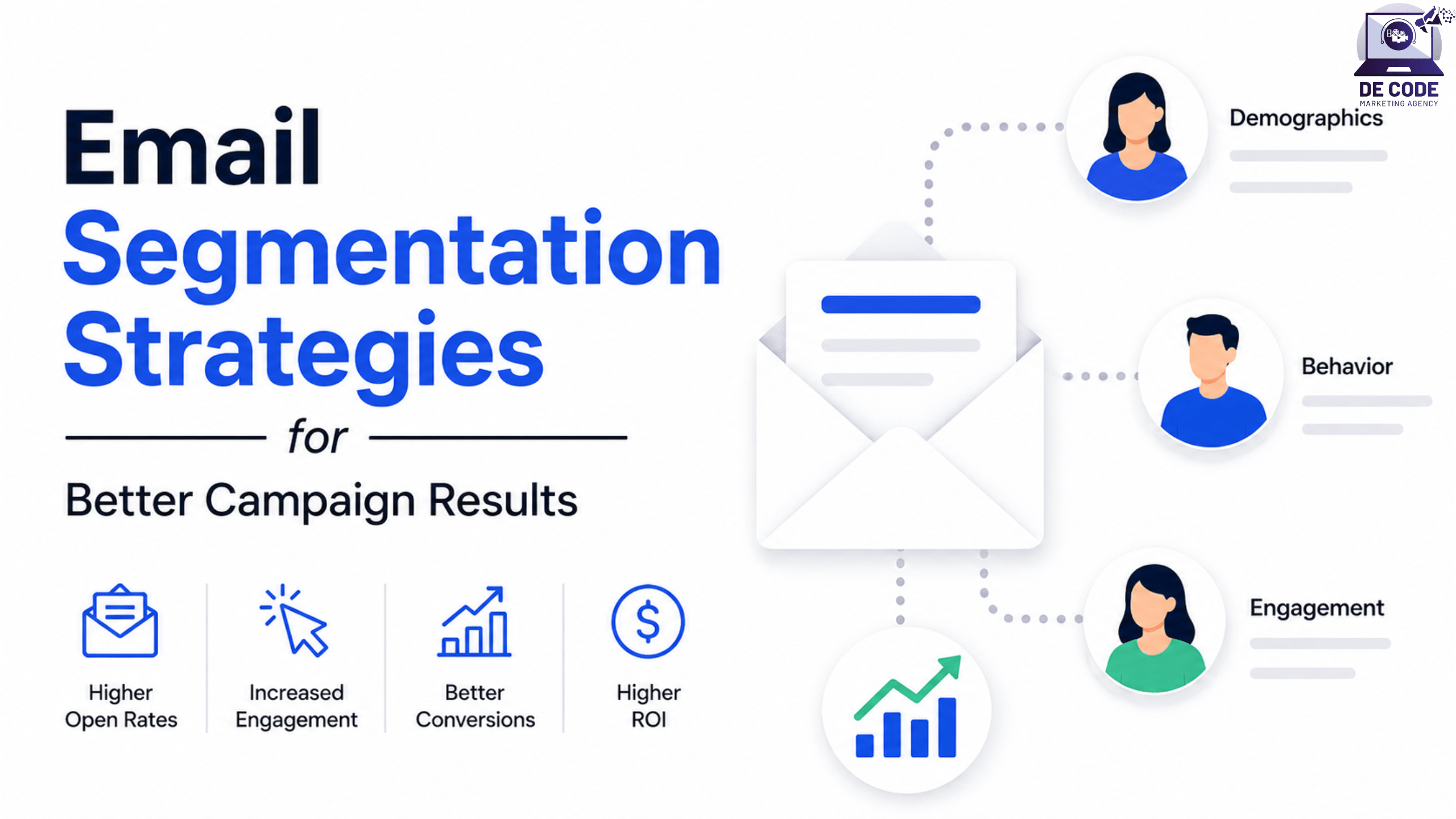
Email Segmentation is the process of dividing an email list into smaller, more targeted groups based on specific criteria such as demographics, purchase history, engagement level, or location. By segmenting an audience, marketers can send more relevant and personalized messages that resonate with each group. This approach not only increases engagement but also drives higher conversions and builds stronger relationships with customers.
This comprehensive guide explores the importance of Email Segmentation, its benefits, strategies, tools, and best practices. It also provides actionable insights on how to implement segmentation effectively to achieve better campaign results.
What Is Email Segmentation?

Email segmentation is the strategic practice of dividing your audience into smaller, focused groups customer segments based on specific criteria like behaviour, interests, or demographics. Instead of sending one generic email to everyone, marketers create tailored messages for each segment. These segments can be based on various factors such as age, gender, location, purchase behaviour, or engagement level.
For example, an online clothing store might create separate segments for men and women, or for customers who have purchased in the last 30 days versus those who haven’t purchased in six months. Each group receives content that is relevant to their interests and stage in the customer journey.
The goal of Email Segmentation is to deliver the right message to the right person at the right time. This approach increases the likelihood that recipients will open, read, and act on the email.
Why Email Segmentation Matters

The importance of Email Segmentation cannot be overstated. In today’s competitive digital landscape, personalization is key to standing out in crowded inboxes. Studies show that segmented email campaigns can generate up to 760% more revenue than non-segmented campaigns. This is because segmentation allows marketers to send messages that are more relevant and engaging.
Here are some reasons why Email Segmentation is essential:
- Improved Open Rates: When emails are tailored to specific interests, subscribers are more likely to open them. Personalized subject lines and relevant content capture attention.
- Higher Click-Through Rates: Segmented emails often include content that aligns with the recipient’s preferences, leading to more clicks and interactions.
- Reduced Unsubscribe Rates: Sending irrelevant emails can frustrate subscribers. Email Segmentation ensures that each message adds value, reducing the likelihood of unsubscribes.
- Better Conversion Rates: Targeted messages guide subscribers toward actions that match their needs, resulting in higher conversions.
- Enhanced Customer Retention: By understanding customer behavior and preferences, businesses can nurture long-term relationships through consistent, relevant communication.
- Efficient Use of Resources: Instead of sending mass emails that yield poor results, Email Segmentation allows marketers to focus efforts on high-value segments.
Email segmentation becomes even more effective when combined with a strong digital marketing funnel, as explained in Building a Digital Marketing Funnel That Converts, which helps guide users through each stage of the customer journey.
The Core Principles of Email Segmentation

To implement Email Segmentation effectively, it’s important to understand its core principles. These principles guide how to divide and target audiences for maximum impact.
1. Relevance
Every email should be relevant to the recipient. Segmentation ensures that messages align with the subscriber’s interests, behavior, and stage in the customer journey.
2. Data-Driven Decisions
Effective Email Segmentation relies on accurate data. Collecting and analyzing subscriber information helps identify meaningful patterns and create precise segments.
3. Personalization
Segmentation enables personalization beyond just using a subscriber’s name. It allows for customized content, product recommendations, and timing.
4. Continuous Optimization
Segmentation is not a one-time task. It requires ongoing testing, analysis, and refinement to ensure that segments remain accurate and effective.
Types of Email Segmentation
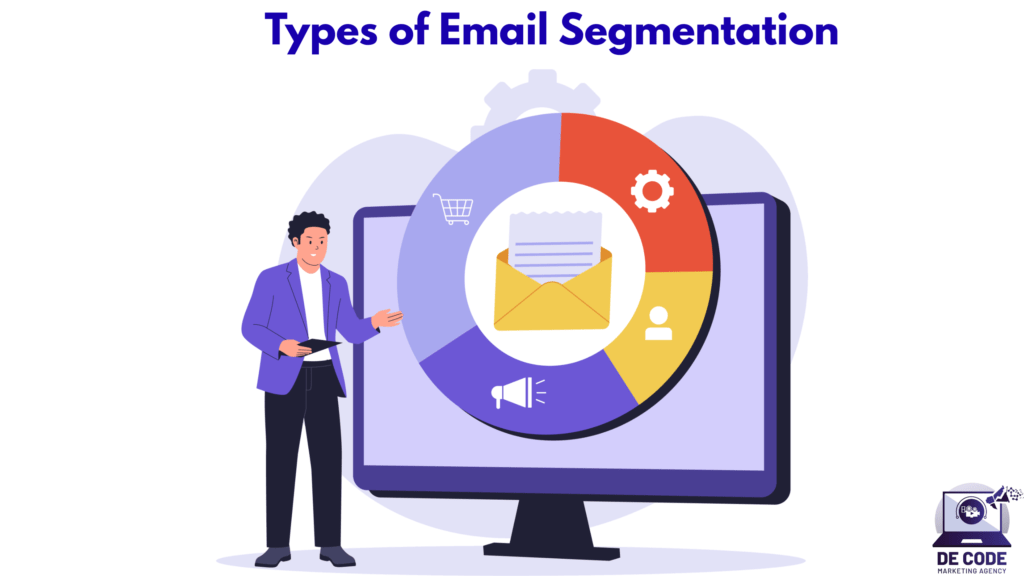
There are many ways to segment an email list. The best approach depends on the business type, goals, and available data. Below are the most common types of Email Segmentation.
1. Demographic Segmentation
This involves dividing subscribers based on demographic factors such as age, gender, income, education, or occupation. For example, a beauty brand might send different product recommendations to men and women.
2. Geographic Segmentation
Geographic Email Segmentation targets subscribers based on their location. This is useful for businesses with region-specific offers, events, or shipping policies.
3. Behavioral Segmentation
Behavioral segmentation focuses on how subscribers interact with a brand. This includes purchase history, website activity, and email engagement. For instance, customers who frequently buy from a certain category can receive related product suggestions.
4. Psychographic Segmentation
This type of Email Segmentation considers lifestyle, values, interests, and personality traits. It helps create emotionally resonant messages that connect with subscribers on a deeper level.
5. Engagement-Based Segmentation
Subscribers can be grouped based on how often they open or click emails. Highly engaged users might receive exclusive offers, while inactive users could get re-engagement campaigns.
6. Lifecycle Segmentation
Lifecycle Email Segmentation divides subscribers based on their stage in the customer journey new leads, first-time buyers, repeat customers, or lapsed users. Each stage requires a different communication approach.
Benefits of Email Segmentation
Implementing Email Segmentation offers numerous benefits that directly impact marketing performance and business growth.
1. Increased Engagement
Segmented emails are more relevant, leading to higher open and click rates. Subscribers are more likely to interact with content that matches their interests.
2. Better Deliverability
When subscribers engage positively with emails, it signals to email service providers that the sender is trustworthy. This improves deliverability and reduces the risk of emails landing in spam folders.
3. Enhanced Customer Experience
Email Segmentation ensures that subscribers receive content that feels personalized and valuable, improving their overall experience with the brand.
4. Higher ROI
Targeted campaigns often yield better results with fewer resources. Businesses can achieve higher returns on investment by focusing on segments that are most likely to convert.
5. Stronger Brand Loyalty
Consistent, relevant communication builds trust and loyalty. Subscribers who feel understood are more likely to remain long-term customers.
Successful segmentation depends heavily on data analytics because customer behavior and engagement metrics help create more targeted campaigns. Businesses looking to understand this process better can explore The Power of Data Analytics in Digital Marketing, which explains how data-driven decisions improve marketing performance.
How to Implement Email Segmentation
Implementing Email Segmentation requires a structured approach. The following steps outline how to create and manage effective segments.
Step 1: Collect Data
The foundation of Email Segmentation is data. Collect information through signup forms, surveys, purchase records, and website analytics. The more data available, the more precise the segments can be.
Step 2: Define Segmentation Criteria
Decide which factors are most relevant to the business goals. For example, an e-commerce store might focus on purchase behavior, while a nonprofit might segment by donation frequency.
Step 3: Use an Email Marketing Platform
Choose an email marketing platform that supports advanced Email Segmentation features. Tools like Mailchimp, HubSpot, and ActiveCampaign allow marketers to create dynamic segments based on real-time data.
Step 4: Create Segments
Based on the chosen criteria, divide the email list into smaller groups. Each segment should represent a distinct audience with shared characteristics.
Step 5: Develop Targeted Content
Craft email content that speaks directly to each segment’s needs and preferences. This includes personalized subject lines, tailored offers, and relevant visuals.
Step 6: Test and Optimize
Regularly test different segmentation strategies to identify what works best. A/B testing subject lines, content, and timing can reveal valuable insights.
Step 7: Monitor Performance
Track key metrics such as open rates, click-through rates, and conversions for each segment. Use this data to refine future campaigns.
Advanced Email Segmentation Strategies
Once the basics are in place, advanced Email Segmentation techniques can take campaigns to the next level.
1. Predictive Segmentation
Using AI and machine learning, predictive segmentation analyzes past behavior to forecast future actions. This allows marketers to anticipate customer needs and send timely messages.
2. Dynamic Segmentation
Dynamic Email Segmentation automatically updates segments based on real-time data. For example, when a subscriber makes a purchase, they can be moved from a prospect segment to a customer segment instantly.
3. RFM Segmentation
RFM stands for Recency, Frequency, and Monetary value. This method segments customers based on how recently they purchased, how often they buy, and how much they spend.
4. Interest-Based Segmentation
Track which products, categories, or content subscribers engage with most. Use this data to send personalized recommendations and updates.
5. Abandoned Cart Segmentation
Segment subscribers who added items to their cart but didn’t complete the purchase. Send reminder emails with incentives to encourage checkout.
6. Re-Engagement Segmentation
Identify inactive subscribers and create campaigns to win them back. Offer special discounts or ask for feedback to rekindle interest.
7. VIP Customer Segmentation
Reward loyal customers with exclusive offers, early access, or personalized thank-you messages. This strengthens relationships and encourages repeat purchases.
Tools for Effective Email Segmentation
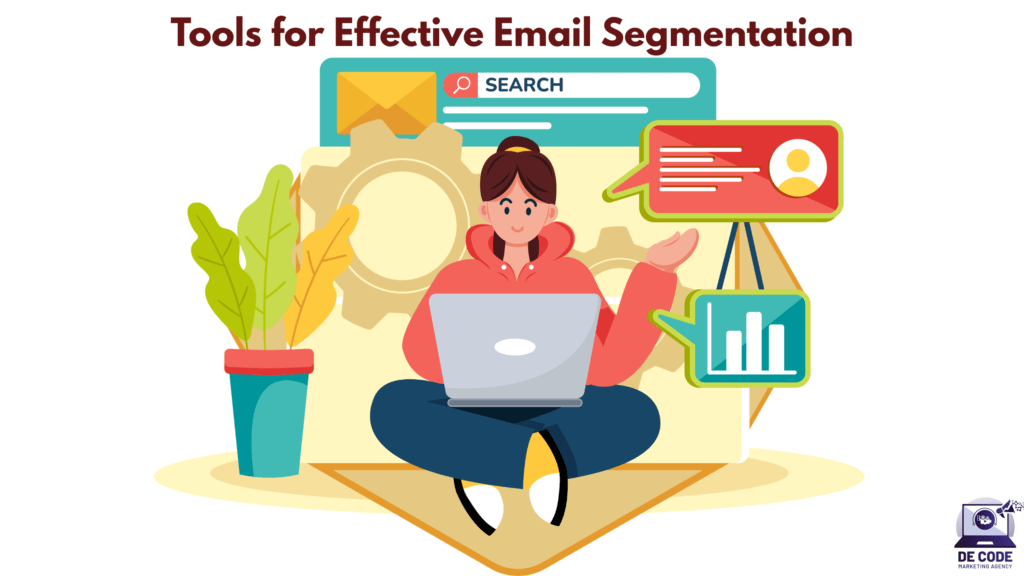
Several tools can simplify and enhance Email Segmentation efforts. These platforms provide automation, analytics, and integration capabilities.
- Mailchimp – Offers advanced segmentation features and predictive insights.
- HubSpot – Provides dynamic segmentation and CRM integration.
- ActiveCampaign – Combines automation with behavioral tracking.
- Klaviyo – Ideal for e-commerce businesses with detailed customer data.
- ConvertKit – Designed for creators and bloggers with tagging-based segmentation.
- GetResponse – Includes advanced analytics and automation workflows.
- Sendinblue – Offers real-time segmentation and personalization tools.
Common Mistakes in Email Segmentation
Even with the best intentions, marketers can make mistakes that reduce the effectiveness of Email Segmentation.
- Over-Segmentation: Creating too many small segments can make management difficult and dilute results.
- Outdated Data: Using old or inaccurate data leads to irrelevant messages. Regularly update subscriber information.
- Ignoring Engagement Metrics: Failing to consider how subscribers interact with emails can result in missed opportunities for optimization.
- Lack of Testing: Without testing, it’s impossible to know which segmentation strategies work best.
- Generic Content: Segmentation is useless if the content isn’t personalized. Each segment should receive unique, relevant messages.
Segmentation becomes ineffective if the content isn’t personalized. Marketers following strategies from Social Media Engagement Tips to Build a Loyal Audience understand that personalized communication creates stronger relationships and increases engagement.
Measuring the Success of Email Segmentation
To evaluate the effectiveness of Email Segmentation, track key performance indicators (KPIs) such as:
- Open Rate – Measures how many recipients open the email.
- Click-Through Rate (CTR) – Indicates how many clicked on links within the email.
- Conversion Rate – Tracks how many completed the desired action.
- Unsubscribe Rate – Shows how many opted out after receiving the email.
- Revenue per Email – Calculates the financial return from each campaign.
Analyzing these metrics helps identify which segments perform best and where improvements are needed.
Case Studies: Successful Email Segmentation in Action
Case Study 1: E-Commerce Brand
An online retailer implemented Email Segmentation based on purchase history and engagement. Customers who frequently bought athletic wear received fitness-related promotions, while those interested in casual clothing got lifestyle content. The result was a 45% increase in click-through rates and a 30% boost in sales.
Case Study 2: SaaS Company
A software company segmented its email list by user activity. Active users received feature updates, while inactive users got re-engagement campaigns. This approach reduced churn by 20% and increased renewals.
Case Study 3: Nonprofit Organization
A nonprofit used Email Segmentation to target donors based on donation frequency. Regular donors received impact stories, while one-time donors got appeals for recurring contributions. Donations increased by 25% within three months.
Best Practices for Email Segmentation

- Start Simple: Begin with basic segments and expand as more data becomes available.
- Use Automation: Automate segmentation updates to ensure accuracy and save time.
- Personalize Beyond Names: Include personalized recommendations, dynamic content, and tailored offers.
- Test Regularly: Continuously test different segmentation strategies to find what works best.
- Respect Privacy: Always comply with data protection regulations like GDPR and CCPA.
- Keep Data Clean: Regularly remove inactive subscribers and update contact information.
The Future of Email Segmentation

The future of Email Segmentation lies in automation, artificial intelligence, and predictive analytics. As technology evolves, marketers will gain deeper insights into customer behavior, enabling hyper-personalized campaigns. AI-driven segmentation will allow real-time adjustments based on user interactions, ensuring that every email is timely and relevant.
Voice assistants, smart devices, and omnichannel integration will further enhance Email Segmentation, allowing brands to deliver consistent experiences across multiple touchpoints. The focus will shift from static segments to dynamic, behavior-driven personalization. As personalization becomes increasingly important, businesses focusing on audience relationships through strategies discussed in The Importance of Branding in Digital Marketing can create stronger long-term engagement.
Integrating Email Segmentation with Other Marketing Channels
To maximize results, Email Segmentation should not exist in isolation. Integrating segmentation with other marketing channels creates a unified customer experience.
1. Social Media Integration
By syncing email segments with social media audiences, marketers can deliver consistent messages across platforms. For example, a segment of high-value customers can receive exclusive offers via both email and social ads.
2. SMS Marketing
Combining Email Segmentation with SMS campaigns ensures that time-sensitive messages reach subscribers quickly. For instance, flash sale alerts can be sent via SMS to active buyers.
3. Website Personalization
Data from Email Segmentation can inform website content. When a subscriber visits the site, they can see personalized product recommendations based on their email segment.
4. CRM Integration
Integrating segmentation with a CRM system provides a 360-degree view of each customer. This allows for more accurate targeting and better alignment between sales and marketing teams.
5. Retargeting Campaigns
Segments of inactive subscribers can be retargeted through display ads or social media to re-engage them outside the inbox.
Building a Data-Driven Segmentation Framework
A successful Email Segmentation strategy depends on a strong data foundation. Building a data-driven framework involves several key steps:
- Data Collection – Gather data from multiple sources, including website analytics, purchase history, and customer surveys.
- Data Integration – Combine data from different systems into a single platform for a unified view.
- Data Analysis – Use analytics tools to identify patterns and trends that inform segmentation.
- Data Maintenance – Regularly clean and update data to ensure accuracy.
- Data Security – Protect subscriber information and comply with privacy regulations.
A data-driven approach ensures that Email Segmentation decisions are based on facts rather than assumptions.
The Role of Artificial Intelligence in Email Segmentation

Artificial intelligence (AI) is revolutionizing Email Segmentation by automating data analysis and predicting customer behavior. AI tools can analyze vast amounts of data to identify hidden patterns and create highly targeted segments.
AI Applications in Email Segmentation:
- Predictive Analytics: Forecasts which subscribers are most likely to convert.
- Behavioral Triggers: Sends automated emails based on real-time actions.
- Content Optimization: Suggests personalized content for each segment.
- Engagement Scoring: Ranks subscribers based on their likelihood to engage.
AI-driven Email Segmentation not only saves time but also enhances accuracy and scalability.
Frequently Asked Questions (FAQs)

1. What is email segmentation in digital marketing?
Email segmentation is the process of dividing an email list into smaller groups based on factors like demographics, behavior, interests, or purchase history to deliver more relevant messages.
2. Why is email segmentation important for campaign success?
Segmentation improves personalization, increases open rates, boosts engagement, and helps generate better conversions by sending content that matches audience interests.
3. What are the most common ways to segment an email list?
Common segmentation methods include demographics, geographic location, purchase history, browsing behavior, engagement level, and customer lifecycle stage.
4. How does segmentation improve email open rates?
Targeted emails are more relevant to subscribers, making them more likely to open messages that match their interests or needs.
5. Can small businesses benefit from email segmentation?
Yes, even small businesses can use segmentation to create personalized campaigns, improve customer relationships, and maximize marketing ROI.
6. What tools can help with email segmentation?
Most email marketing platforms provide segmentation features that allow marketers to organize subscribers and automate targeted campaigns.
7. How often should email segments be updated?
Email segments should be reviewed and updated regularly because customer behaviors, preferences, and engagement patterns change over time.
8. What is behavioral segmentation in email marketing?
Behavioral segmentation groups subscribers based on actions such as website visits, email clicks, purchases, or content interactions.
Conclusion
Email Segmentation is no longer optional it’s a necessity for any business that wants to succeed in email marketing. By dividing subscribers into meaningful groups and delivering personalized content, marketers can achieve higher engagement, better conversions, and stronger customer relationships.
The key to success lies in understanding the audience, collecting accurate data, and continuously optimizing segmentation strategies. With the right tools and approach, Email Segmentation can transform email marketing from a generic communication channel into a powerful driver of growth and loyalty.