Pay-per-click (PPC) advertising is one of the most effective digital marketing strategies for driving targeted traffic, generating leads, and increasing sales. Whether promoting a local business, an e-commerce store, or a global brand, PPC allows advertisers to reach potential customers at the exact moment they’re searching for related products or services. This guide provides a complete overview of PPC advertising for beginners, covering everything from basic concepts to advanced optimization techniques.
To see how PPC fits into a broader strategy, check out The Ultimate Guide to Digital Marketing for Small Businesses, which covers the fundamentals of digital marketing.
What Is PPC Advertising?
PPC stands for pay-per-click, a model of internet marketing where advertisers pay a fee each time one of their ads is clicked. Instead of earning visits organically through search engine optimization (SEO), PPC allows businesses to buy visits to their websites. The most common PPC platform is Google Ads, but other major platforms include Bing Ads, Facebook Ads, Instagram Ads, LinkedIn Ads, and YouTube Ads.
How PPC Advertising Works
- Advertiser creates an ad campaign targeting specific keywords or audiences.
- Users search or browse content related to those keywords or interests.
- Ad auction occurs where multiple advertisers compete for ad placement.
- Winning ads appear in search results or on partner websites.
- Advertiser pays only when a user clicks the ad.
This model ensures that advertisers only pay for actual engagement, making PPC a cost-effective and measurable marketing channel.
Benefits of PPC Advertising
1. Immediate Results
Unlike SEO, which can take months to show results, PPC campaigns can generate traffic and leads within hours of launch.
2. Highly Targeted Reach
PPC platforms allow advertisers to target users based on demographics, location, interests, device type, and even behavior.
3. Budget Control
Advertisers can set daily or monthly budgets, ensuring they never spend more than planned.
4. Measurable Performance
Every click, impression, and conversion can be tracked, allowing for precise ROI measurement.
5. Brand Visibility
Even if users don’t click, appearing at the top of search results increases brand awareness and credibility.
6. Flexibility and Scalability
Campaigns can be paused, adjusted, or scaled at any time, allowing advertisers to adapt quickly to market changes.
7. Competitive Advantage
Smaller businesses can compete with larger brands by targeting niche keywords and local audiences.
8. Enhanced Customer Insights
PPC data reveals valuable insights about customer behavior, preferences, and purchasing patterns.
9. Multi-Channel Reach
PPC campaigns can run across multiple platforms simultaneously, ensuring consistent brand exposure.
Key PPC Advertising Platforms
1. Google Ads
The largest and most popular PPC platform, Google Ads allows advertisers to display ads on Google Search, YouTube, and partner websites.
2. Microsoft Advertising (Bing Ads)
Targets users on Bing, Yahoo, and AOL search networks. It often has lower competition and cost-per-click (CPC) rates than Google.
3. Facebook Ads
Ideal for targeting users based on interests, behaviors, and demographics. Great for brand awareness and retargeting.
4. Instagram Ads
A visual platform perfect for lifestyle, fashion, beauty, and e-commerce brands.
5. LinkedIn Ads
Best for B2B marketing, allowing advertisers to target professionals by job title, industry, and company size.
6. YouTube Ads
Video-based ads that appear before or during YouTube videos, ideal for storytelling and brand engagement.
7. TikTok Ads
Short-form video ads that reach younger audiences through creative and engaging content.
8. Pinterest Ads
Visual discovery ads that work well for home decor, fashion, and DIY brands.
9. Twitter (X) Ads
Useful for promoting trending topics, events, and brand awareness through promoted tweets and hashtags.
10. Amazon Ads
Perfect for e-commerce sellers who want to promote products directly within Amazon’s marketplace.
Many of these platforms fall under social media advertising—learn how to use them effectively in How Social Media Marketing Can Transform Your Brand in 2026.
Understanding the PPC Advertising Auction System
Every time a user performs a search, an ad auction determines which ads appear and in what order. The auction considers two main factors:
- Bid Amount – The maximum amount an advertiser is willing to pay per click.
- Quality Score – A metric based on ad relevance, expected click-through rate (CTR), and landing page experience.
Ad Rank Formula
Ad Rank = Bid Amount × Quality Score
A higher Ad Rank increases the chances of appearing in top positions. This means even if a competitor bids more, a better-quality ad can still win higher placement at a lower cost.
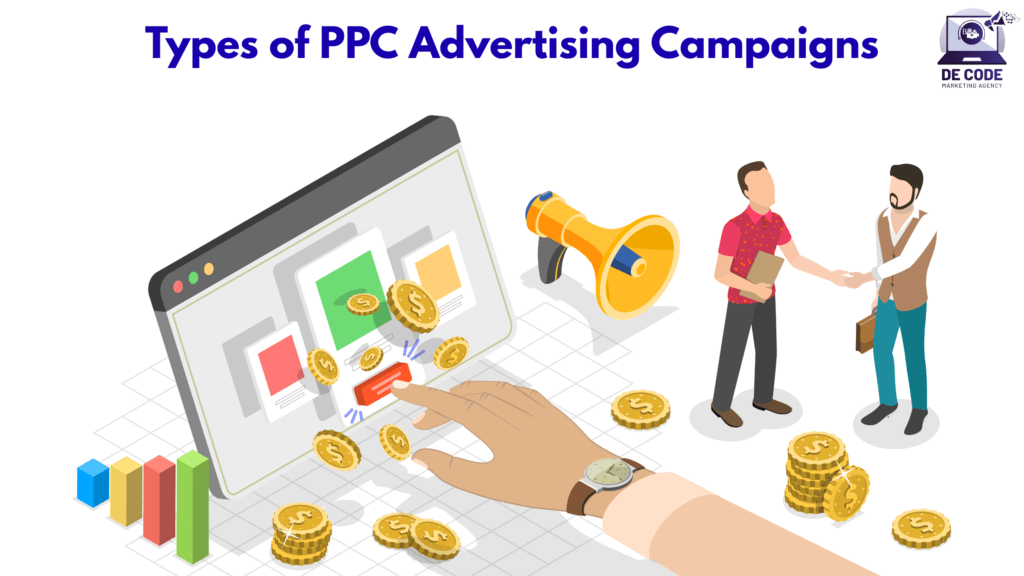
Types of PPC Advertising Campaigns
1. Search Ads
Text-based ads that appear on search engine results pages (SERPs) when users search for specific keywords.
2. Display Ads
Visual banner ads that appear on websites within the Google Display Network or other ad networks.
3. Shopping Ads
Product-based ads that show images, prices, and store names, ideal for e-commerce businesses.
4. Video Ads
Short video clips displayed on YouTube or other video platforms.
5. Remarketing Ads
Target users who have previously visited a website but didn’t convert, encouraging them to return and complete a purchase.
6. App Promotion Ads
Designed to increase app downloads or engagement.
7. Local Service Ads
Used by service-based businesses to appear in local search results with verified listings.
8. Smart Campaigns
Automated campaigns that use machine learning to optimize targeting and bidding.
9. Discovery Ads
Ads that appear across Google’s Discover feed, YouTube, and Gmail, reaching users during their browsing journey.
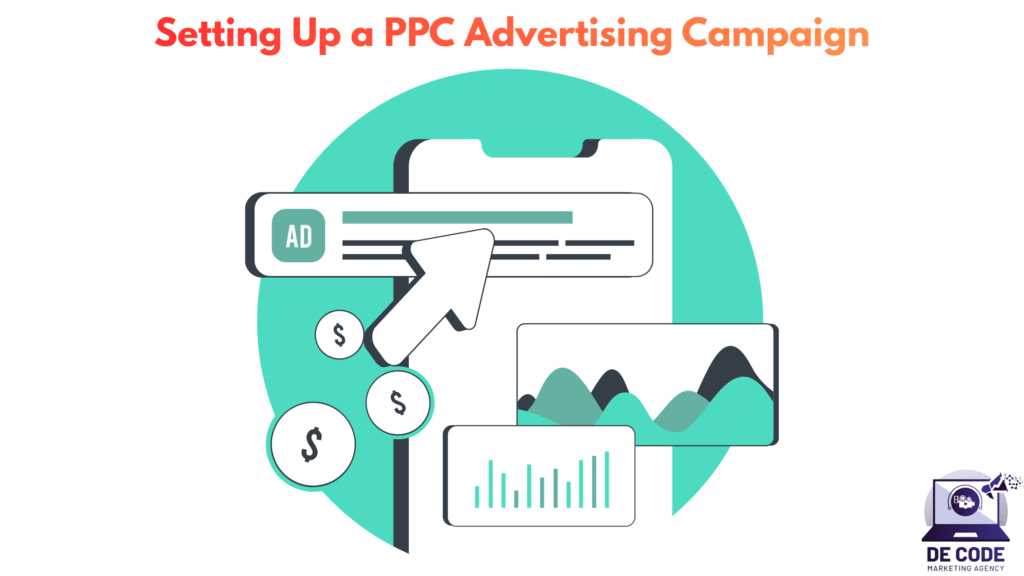
Setting Up a PPC Advertising Campaign
Step 1: Define Goals
Determine what the campaign should achieve—sales, leads, website traffic, or brand awareness.
Step 2: Keyword Research
Use tools like Google Keyword Planner, SEMrush, or Ahrefs to find relevant keywords with high search volume and manageable competition.
Step 3: Choose Campaign Type
Select the appropriate campaign type based on goals—search, display, shopping, or video.
Step 4: Set Budget and Bids
Decide on a daily or monthly budget and choose a bidding strategy (manual CPC, automated bidding, or target CPA).
Step 5: Create Ad Groups
Organize ads by theme or product category. Each ad group should target a specific set of related keywords.
Step 6: Write Compelling Ad Copy
Include the target keyword, a clear value proposition, and a strong call-to-action (CTA).
Step 7: Design Landing Pages
Ensure the landing page matches the ad’s message, loads quickly, and includes a clear conversion path.
Step 8: Launch and Monitor
After launching, monitor performance metrics such as CTR, conversion rate, and cost per conversion.
Keyword Research and Match Types
Keyword Match Types
- Broad Match – Ads show for searches related to the keyword, even if not exact.
- Phrase Match – Ads show for searches containing the exact phrase or close variations.
- Exact Match – Ads show only for searches that match the exact keyword.
- Negative Keywords – Prevent ads from showing for irrelevant searches.
Long-Tail Keywords
Long-tail keywords are longer, more specific phrases that usually have lower competition and higher conversion rates. For example, “affordable hair salon in Centennial CO” is more targeted than “hair salon.”
Keyword Intent
Understanding user intent is crucial:
- Informational – Users seeking knowledge.
- Navigational – Users looking for a specific brand or site.
- Transactional – Users ready to make a purchase.
Focus on transactional and commercial intent keywords for higher ROI.
Seasonal Keyword Planning
Adjust keyword targeting based on seasonal trends. For example, a salon might target “prom hairstyles” in spring and “holiday hair color” in winter.
Writing Effective PPC Advertising
Key Components of a PPC Ad
- Headline – Capture attention with a keyword and benefit.
- Description – Highlight features, offers, or unique selling points.
- Display URL – Reinforce brand trust and relevance.
- Call-to-Action (CTA) – Encourage users to take immediate action (e.g., “Book Now,” “Get a Free Quote”).
Tips for High-Performing Ads
- Use emotional triggers and urgency.
- Include numbers or statistics.
- Test multiple ad variations (A/B testing).
- Align ad copy with landing page content.
- Use ad extensions to add more value.
- Keep language simple and persuasive.
- Highlight promotions or limited-time offers.
Landing Page Optimization
A well-optimized landing page can significantly improve conversion rates and Quality Score.
Best Practices
- Keep the design clean and mobile-friendly.
- Use a clear headline that matches the ad.
- Include trust signals like testimonials or certifications.
- Minimize distractions and focus on one conversion goal.
- Use fast-loading images and concise copy.
- Add a visible CTA button above the fold.
Example of a High-Converting Landing Page
A salon running a PPC ad for “bridal makeup in Centennial CO” should have a landing page featuring bridal makeup packages, before-and-after photos, client testimonials, and a “Book Your Trial” button.
Tracking and Measuring PPC Performance
Key Metrics
- Impressions – Number of times the ad is shown.
- Clicks – Number of times users click the ad.
- Click-Through Rate (CTR) – Percentage of impressions that result in clicks.
- Cost Per Click (CPC) – Average amount paid per click.
- Conversion Rate – Percentage of clicks that result in desired actions.
- Cost Per Conversion – Total cost divided by number of conversions.
- Return on Ad Spend (ROAS) – Revenue generated per dollar spent on ads.
- Quality Score – Google’s rating of ad relevance and landing page experience.
Tools for Tracking
- Google Analytics
- Google Ads Conversion Tracking
- Facebook Pixel
- UTM Parameters
- Call Tracking Software
- HubSpot or CRM integrations
Common PPC Advertising Mistakes to Avoid
- Ignoring Negative Keywords – Leads to wasted spend on irrelevant clicks.
- Poor Ad Copy – Reduces CTR and Quality Score.
- Sending Traffic to the Homepage – Always use targeted landing pages.
- Not Tracking Conversions – Makes it impossible to measure ROI.
- Setting and Forgetting Campaigns – Regular optimization is essential.
- Overbidding Without Strategy – Can quickly drain the budget.
- Ignoring Mobile Users – Mobile optimization is critical for conversions.
- Neglecting Ad Extensions – Missed opportunities for higher CTR.
- Failing to Test Ads – A/B testing is key to improving performance.
- Not Using Geo-Targeting – Leads to wasted impressions outside service areas.
Advanced PPC Advertising Strategies
1. Remarketing
Re-engage users who visited the website but didn’t convert. Use tailored ads to remind them of products or offers.
2. Audience Segmentation
Create custom audiences based on demographics, interests, or behaviors for more personalized targeting.
3. Automated Bidding
Use machine learning to optimize bids for conversions or ROAS automatically.
4. Ad Extensions
Enhance ads with additional information like phone numbers, site links, or reviews.
5. Geo-Targeting
Focus ads on specific locations to reach local customers effectively.
6. Time Scheduling
Run ads during peak hours or days when the target audience is most active.
7. Dynamic Search Ads
Automatically generate ads based on website content to capture additional search traffic.
8. Competitor Targeting
Bid on competitor brand names to capture potential customers exploring alternatives.
9. Cross-Device Targeting
Ensure ads reach users across mobile, desktop, and tablet devices for consistent engagement.
10. Conversion Rate Optimization (CRO)
Use A/B testing, heatmaps, and analytics to improve landing page performance and increase conversions.
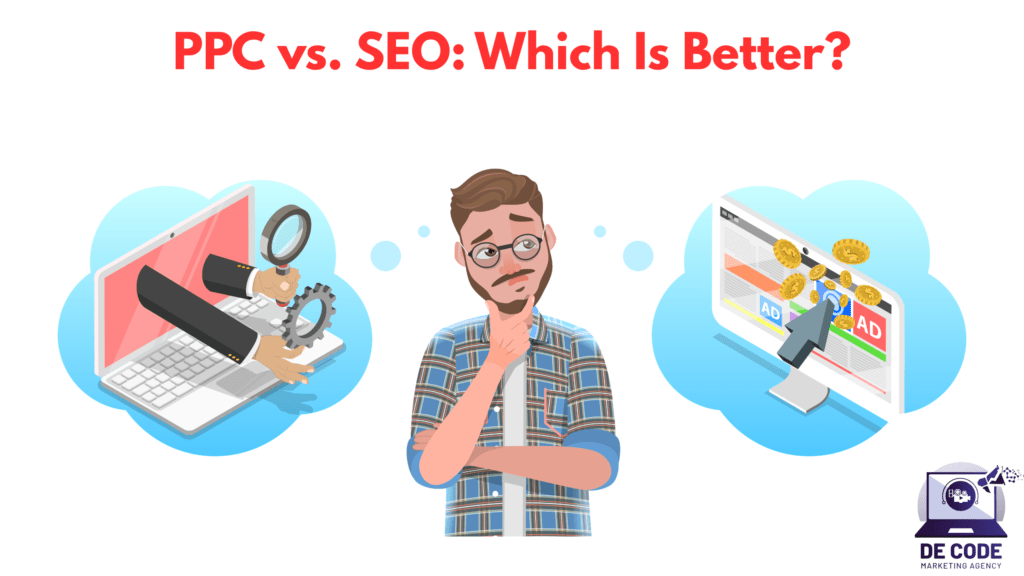
PPC vs. SEO: Which Is Better?
| Aspect | PPC | SEO |
| Cost | Pay per click | Free (but time-intensive) |
| Speed | Immediate results | Takes months |
| Longevity | Stops when budget ends | Long-term |
| Control | Full control over targeting | Dependent on algorithms |
| Best For | Short-term campaigns | Long-term growth |
Both PPC and SEO complement each other. PPC provides instant visibility, while SEO builds sustainable organic traffic.
While PPC delivers instant traffic, SEO is focused on long-term growth—if you want to dive deeper, check out SEO 101: How to Rank Your Website Higher on Google to learn how to build sustainable organic visibility.
Budgeting and Bidding Strategies
Common Bidding Strategies
- Manual CPC – Full control over bids.
- Enhanced CPC – Adjusts bids automatically for better conversions.
- Target CPA – Optimizes for a specific cost per acquisition.
- Target ROAS – Focuses on maximizing return on ad spend.
- Maximize Clicks – Aims to get the most clicks within budget.
- Maximize Conversions – Uses AI to drive as many conversions as possible.
Budget Allocation Tips
- Start small and scale gradually.
- Allocate more budget to high-performing campaigns.
- Reinvest profits into remarketing or new keyword testing.
- Use shared budgets for multiple campaigns.
- Monitor daily spend to avoid overspending.
PPC Tools and Resources
- Google Keyword Planner – Keyword research and forecasting.
- SEMrush – Competitor analysis and keyword tracking.
- Ahrefs – Keyword and backlink insights.
- SpyFu – Competitor PPC strategy analysis.
- Canva – Create visually appealing display and social media ads.
- Google Analytics – Track user behavior and conversions.
- Optmyzr – Automate PPC optimization tasks.
- Unbounce – Build high-converting landing pages.
- Hotjar – Analyze user behavior on landing pages.
- AdEspresso – Simplify Facebook and Instagram ad management.
Future Trends in PPC Advertising

- AI and Automation – Smarter bidding and audience targeting.
- Voice Search Ads – Optimizing for conversational queries.
- Video and Interactive Ads – Engaging users through immersive content.
- Privacy and Data Regulations – Adapting to cookie-less tracking.
- Cross-Platform Integration – Unified campaigns across multiple channels.
- Augmented Reality (AR) Ads – Interactive experiences for users.
- Predictive Analytics – Using data to forecast campaign performance.
- Sustainability Messaging – Ads focusing on eco-friendly values.
- AI-Generated Ad Copy – Faster ad creation with machine learning tools.
- Hyper-Personalization – Ads tailored to individual user behavior.
Case Study: Local Business PPC Advertising Success
A local beauty salon in Centennial, CO, launched a Google Ads campaign targeting “hair coloring near me” and “bridal makeup Centennial.” With a $500 monthly budget, the campaign achieved:
- 2,000 impressions per week
- 250 clicks
- 40 new client bookings
- $2,500 in revenue
By optimizing keywords, improving ad copy, and using remarketing, the salon achieved a 5x return on ad spend within two months.
How to Scale PPC Advertising Campaigns
- Increase Budget Gradually – Scale by 10–20% weekly to maintain performance.
- Expand Keyword Lists – Add new long-tail and related keywords.
- Test New Ad Formats – Try video, carousel, or responsive ads.
- Use Lookalike Audiences – Reach new users similar to existing customers.
- Automate Reporting – Use dashboards to track KPIs efficiently.
- Leverage Seasonal Campaigns – Run special promotions during holidays or events.
- Integrate CRM Data – Use customer data to refine targeting and messaging.
- Collaborate Across Channels – Combine PPC with email and social media marketing.
Ultimate Guide to PPC Advertising for Beginners – FAQ
1. What is PPC advertising?
PPC (Pay-Per-Click) advertising is a digital marketing model where advertisers pay a fee each time someone clicks on their ad. Instead of earning traffic organically, you’re essentially buying visits to your website.
2. How does PPC Advertising work?
Advertisers bid on keywords relevant to their target audience. When users search for those keywords, ads may appear in search engine results or on other platforms. If a user clicks the ad, the advertiser pays a small fee.
3. Which platforms support PPC advertising?
The most popular PPC platforms include:
- Google Ads
- Microsoft Ads (Bing)
- Facebook/Instagram Ads
- LinkedIn Ads
- Twitter (X) Ads
Each platform offers different targeting options and audience types.
4. What are keywords in PPC?
Keywords are the words or phrases that trigger your ads. Choosing the right keywords ensures your ads show to users who are actively searching for your product or service.
5. What is Quality Score?
Quality Score is a metric used (mainly in Google Ads) to determine the relevance and quality of your ads, keywords, and landing pages. A higher score can lead to lower costs and better ad positions.
6. How much does PPC cost?
There’s no fixed cost. You control your budget by setting:
- Daily or monthly spending limits
- Maximum bid per click
Costs vary depending on competition, industry, and keyword demand.
7. What is CPC?
CPC (Cost-Per-Click) is the amount you pay each time someone clicks your ad. It can range from a few cents to several dollars depending on your niche.
8. What is a conversion?
A conversion is any desired action a user takes after clicking your ad, such as:
- Making a purchase
- Signing up for a newsletter
- Filling out a contact form
Conclusion
PPC advertising is a powerful tool for businesses of all sizes. It offers immediate visibility, measurable results, and precise targeting capabilities. By understanding the fundamentals—keyword research, ad creation, bidding strategies, and performance tracking—advertisers can build campaigns that drive real business growth. Continuous testing, optimization, and adaptation to new trends ensure long-term success in the ever-evolving world of digital advertising.
PPC works best when combined with other strategies like SEO, social media, and email marketing. To see how everything fits together, read The Ultimate Guide to Digital Marketing for Small Businesses.